
Justice Sunday was introduced to the Antelope Valley in 2000 by Bishop Henry Hearns as part of the National Alliance of Faith and Justice’s national observance honoring Dr. Martin Luther King Jr. and promoting sustained service, mentorship, and community impact. What began as a call to service has since evolved into one of the region’s most dynamic youth leadership platforms.
In 2016, under the leadership of Nigel Holly, the local program was reimagined as the Justice Sunday Arts Initiative with a bold, youth-centered vision. Shifting from a traditional observance to a student-driven model, the initiative launched its first fully student-produced Justice Sunday Play with a small group of students from Antelope Valley High School. That moment marked a turning point—placing storytelling, Black history, and youth leadership at the forefront.
Since then, students from high schools across the Antelope Valley have dedicated their winter breaks to writing, producing, and performing an original Black History production each year. Every aspect of the production is student-led and alumni-guided, fostering leadership, discipline, creativity, and collaboration; through the Five Tenets of Justice Sunday [research, writing, leadership, public speaking, and networking]. Beyond the stage, participants engage in community events, receive recognition at the local, state, and national levels, and benefit from a strong alumni network that provides ongoing mentorship through high school graduation, college, and beyond.
The timeline that follows captures the key milestones, expansion, and defining achievements that have shaped the Justice Sunday Arts Initiative into the thriving, multigenerational movement it is today.
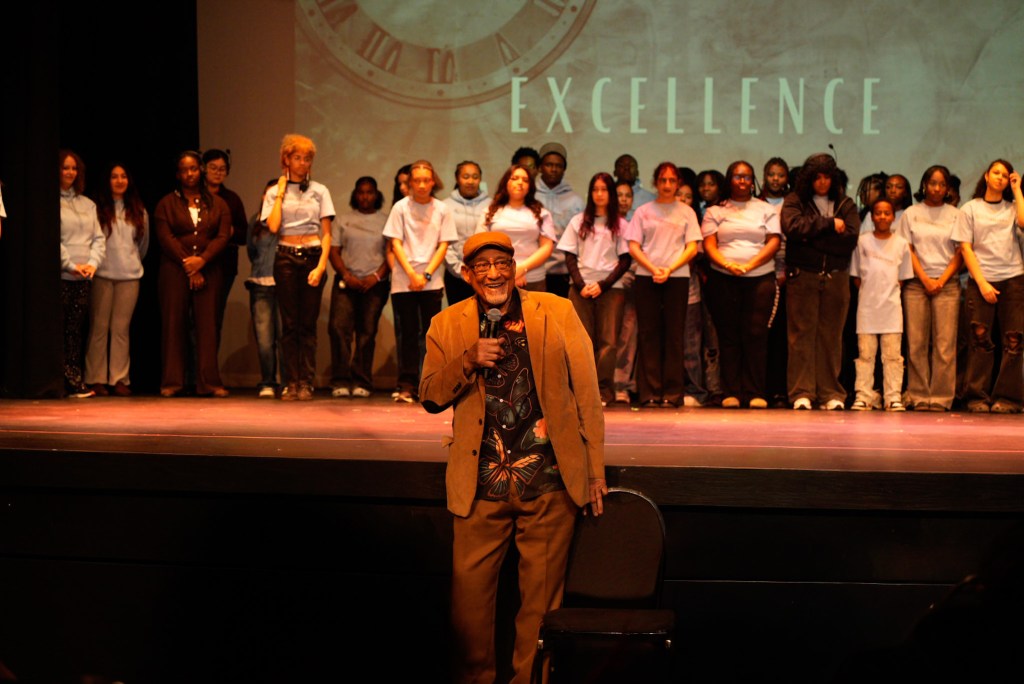
2026: Excellence: Where the Odds Evened
The Just Us Arts Initiative brings AV High School District students together to create a play that honors local legends and their impact, sparking creativity, building teamwork, and celebrating Black History.
To read more about Excellence, and this year’s MLK Day celebrations click here:
2025: Conception: An Exploration of Innovation
Conception: An Exploration of Innovation commences with a child who, in a moment of frustration, wishes away all Black people. She is quickly faced with the profound and immediate consequences of her wish as the world she knows rapidly begins to dissolve before her eyes. With the disappearance of each foundational item, a corresponding Black inventor appears, underscoring their significance and demonstrating the indelible ways Black innovation has shaped our global civilization.
To read more about Conception, click here:
2024: Enticed: A Dream Deferred
Speaks of historical practices and black practices. The story of Black Wall Street, poetically addressed as a response to Langston Hughes’ Harlem, boldly confronts the Dream Deferred narrative. Walking through the lives of Sarah Page and Dick Rowland as they inevitably meet on an elevator in Tulsa. The encounter would lead to the Tulsa Race Massacre, killing hundreds, costing millions, and ultimately destroying one of the most prosperous Black Towns in American history.
To read more about Enticed, click here:
2023: Eclectic: Take Two
Eclectic: Take Two is a modern re-imagining that articulates the persistent narrative surrounding the challenges faced by Black American artists. The play explores the struggles, triumphs, and essential contributions of musicians and comedians throughout the entirety of American history. The narrative is driven by two key personifications: The American Muse of Music and a powerful counter-persona, representing Capitalist influence, embodied as an American Soldier. Unlike the 2021 iteration of Eclectic, this compelling story focuses on the Muse’s significant growth and spirit, detailing her journey to overcome systemic hurdles and ultimately discover her complete independence. This central theme brilliantly mirrors the enduring spirit of Black Americans overcoming adversity and achieving self-determination.
To read more about Eclectic: Take Two, click here:
2022: Endeavor: A Two Year Journey
Endeavor is the journey of freedom, searching for wife and daughter. It speaks directly to the fight for liberty after the Emancipation Proclamation was signed. The story is told through the eyes of the Father, Son, a Confederate Soldier, and a Union Soldier, and explores the complexities of the quest for justice and the two-year period it took for the news of freedom to reach slaves in Galveston, Texas. Juneteenth is Black Americans’ Independence Day.
To read more about Endeavor, click here:
2021: Eclectic
Eclectic is Black history’s contributions told through the Arts. It demonstrates how music interfaces with cultural norms. The story is a love letter from the arts personified as Music, the Muse to America, personified as Uncle Sam. Comedy and Tragedy.
To read more about Eclectic, click here:
2020: Deja Vu
AV Press, January 17, 2020
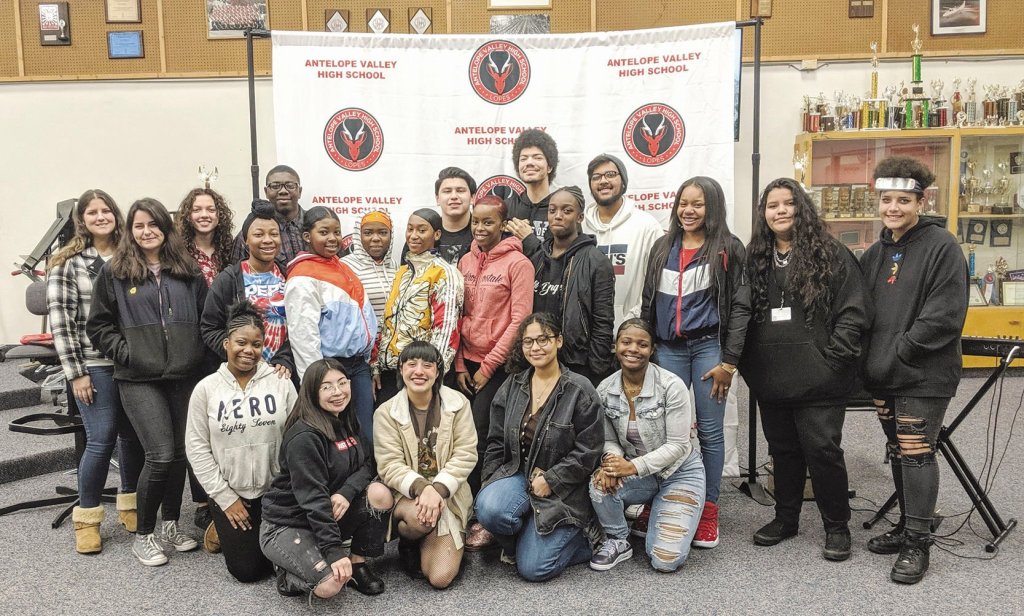
“Students from Antelope Valley and Eastside high schools spent their three-week winter break studying history and writing a play for 20th annual Justice Sunday at 4 p.m. Sunday at the Lancaster Performing Arts Center.
“This year’s play is called “Déjá Vu,” and will take the audience on roller coaster ride through history,” AV High Principal Eric Stanford said during a Thursday morning press conference in the school’s band room attended by Justice Sunday students. “AV High School and the entire district would like to invite the entire community out to participate in Justice Sunday’s 20th celebration.””
To read more about Deja Vu, click here:
2019: Epiphany
AV Press, January 17, 2019
“There will be music, drama, speakers and guests to honor the legacy of the Rev. Martin Luther King Jr. at the 19th annual Justice Sunday at 4 p.m. Sunday at the Lancaster Performing Arts Center.
“We want to invite our entire community so they can both be entertained and educated by our local youth,” said Nigel Holly, Justice Sunday coordinator and mentoring liaison for the city of Lancaster.””
To read more about Epiphany article, click here:
https://www.avpress.com/news/homage-to-dr-king/article_221de260-1a23-11e9-9ec3-83f73f58b5d3.html
2018: Hidden Figures
Valley Press, 2018
“In the 19th annual Justice Sunday observance at the Lancaster Performing Arts Center, students from Antelope Valley and Highland high schools portrayed black Americans from throughout history encouraging President Lyndon Johnson as he pondered signing the 1964 Civil Rights Act.
Called “Hidden Figures” and depicting people ranging from Civil War physician Rebecca Lee Crumpler to football player Colin Kaepernick the production brought on stage teens to talk to Antelope Valley High junior Joseph Ramirez as Johnson, sitting at a desk, as he talked of the diverse effect the law might have on the United States.”
2017: Rock the Boat of Racism
Valley Press, 2017
“Antelope Valley High School students portray people important in African American history — Including John Brown, Harriet Tubman, Nathan Bedford Forrest, Rosa Parks, Malcolm X, and Michelle Obama — Sunday in the Lancaster Performing Arts Center on Justice Sunday.”
 Future Leaders California